
Services
Block paving driveways across Surrey, Hampshire & South West London
Block paving gives a driveway that is hard-wearing, repairable and easy to match to the house, with a choice of colours, laying patterns and borders. As with any drive, how well it lasts depends on the groundwork underneath, and the right way to build it depends on the site.
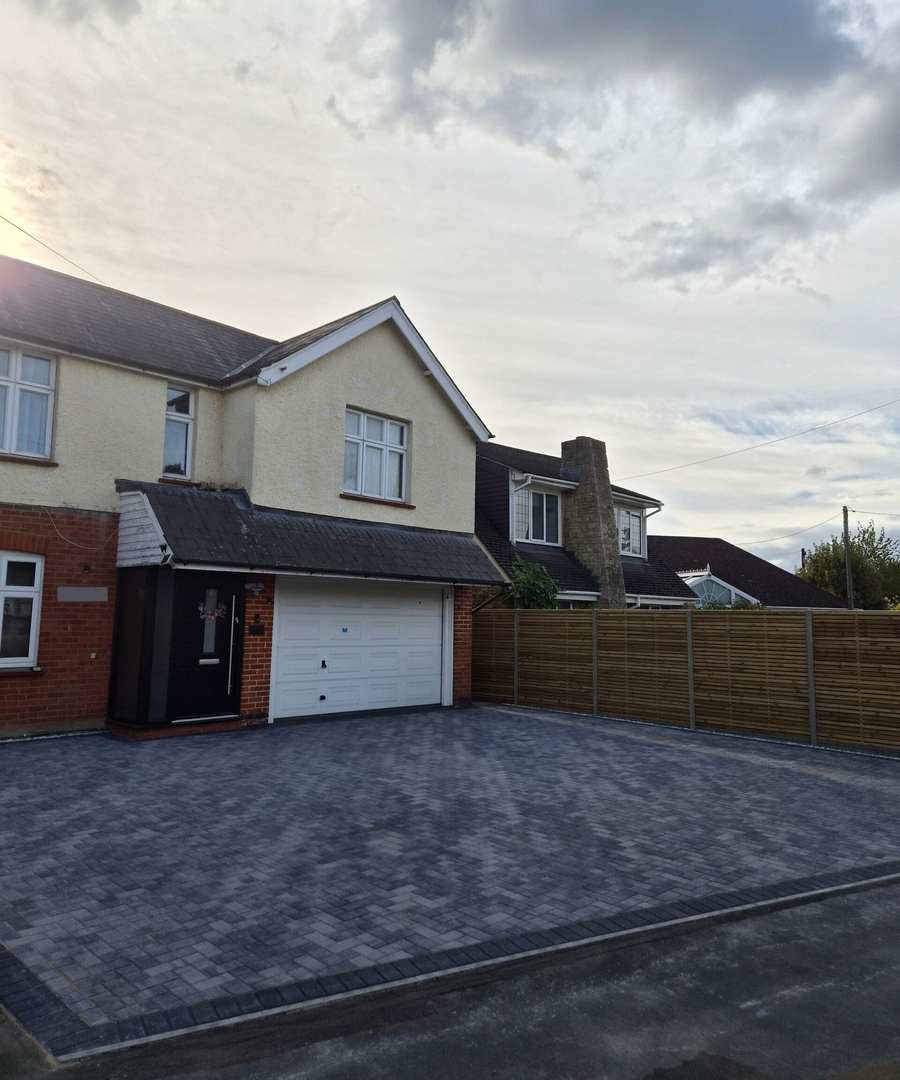
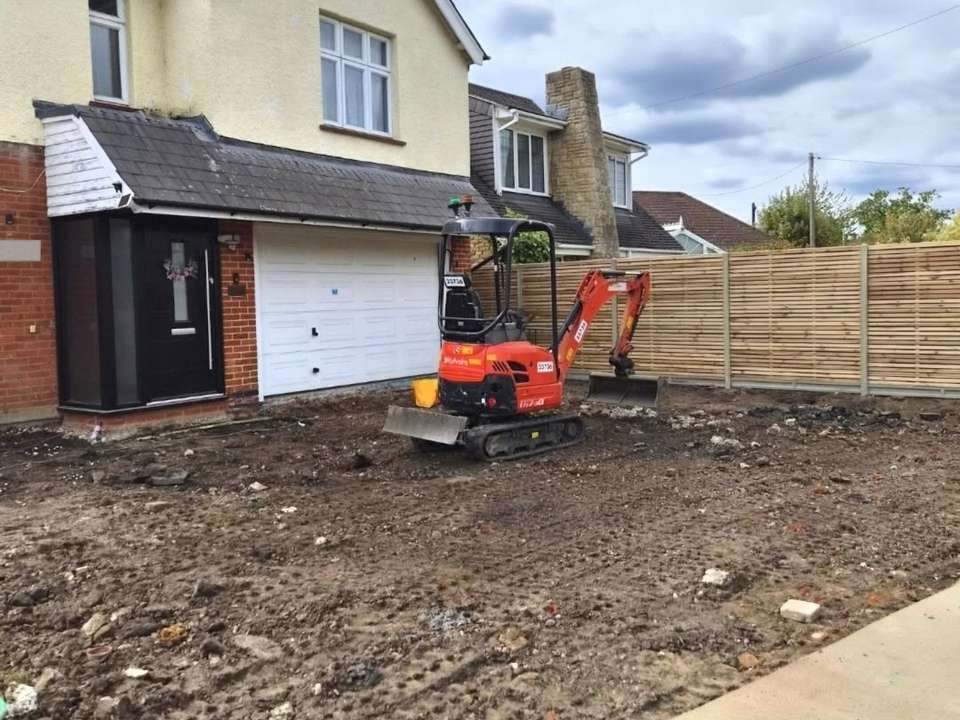
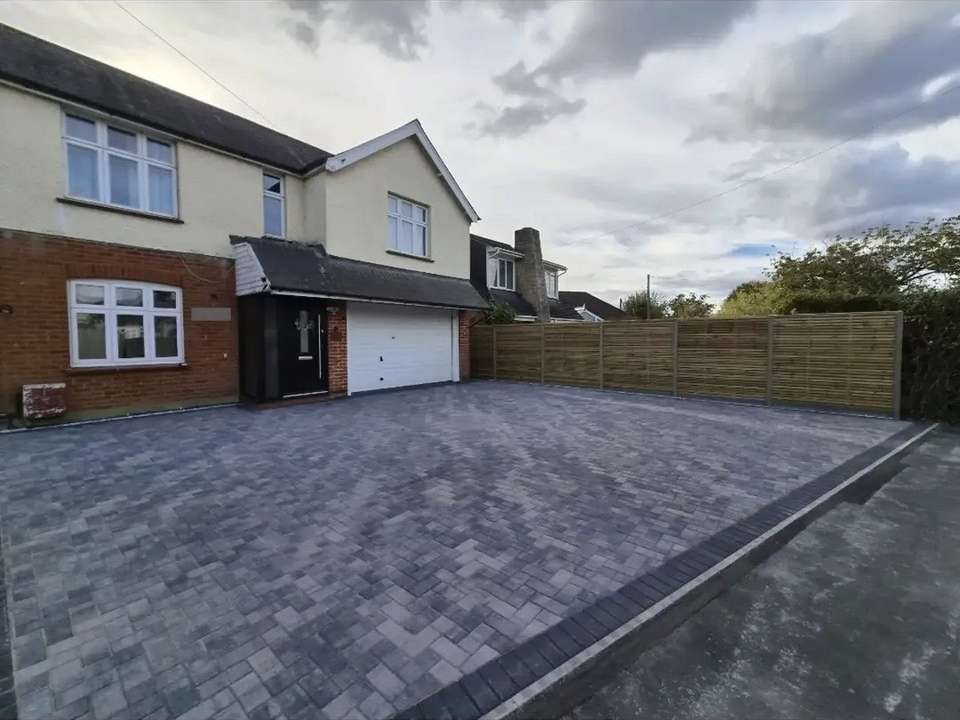
We lay new block-paved driveways, extensions and replacements, in standard and permeable block paving, including the drives in Guildford and Chobham shown on this page. Compare all our driveway options, or see our guides to gravel driveways and resin driveways.
What we do
Our block paving work
- New block-paved driveways
- Replacing an old or worn driveway with block paving
- Driveway extensions in block paving
- Contrasting borders and crisp edging
- Permeable block paving
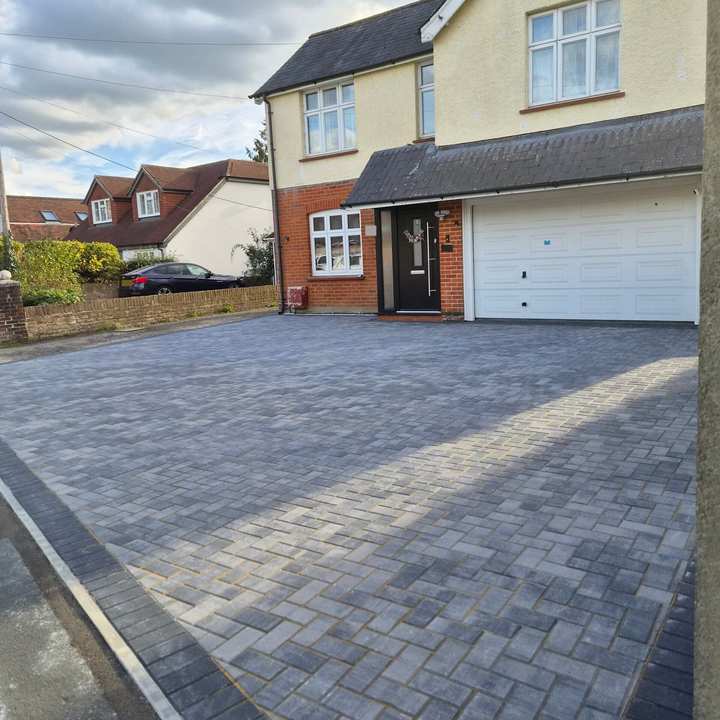
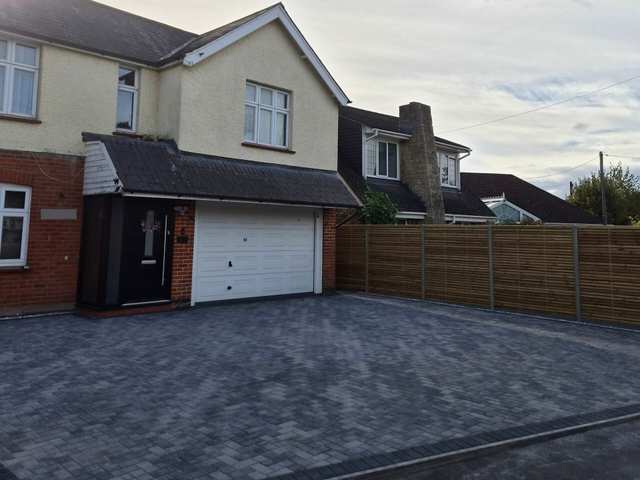
Block-paved driveway with contrasting border, Chobham 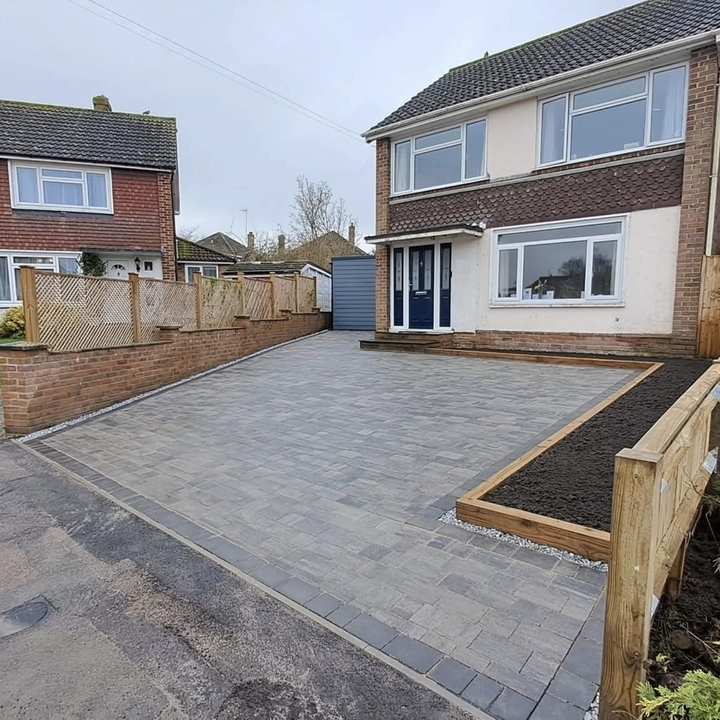
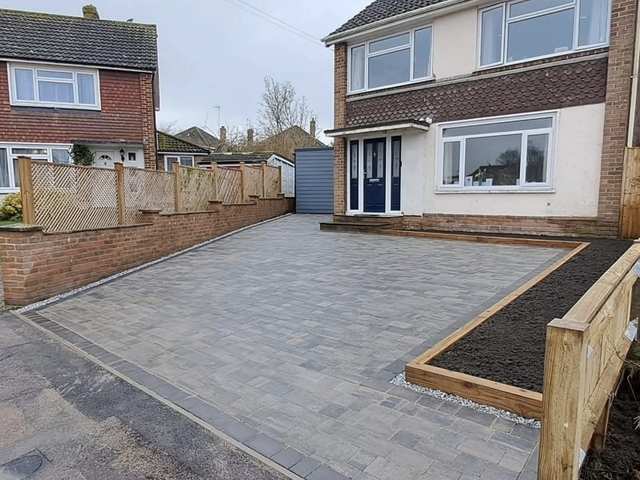
Block-paved driveway and sleeper-edged bed, Guildford 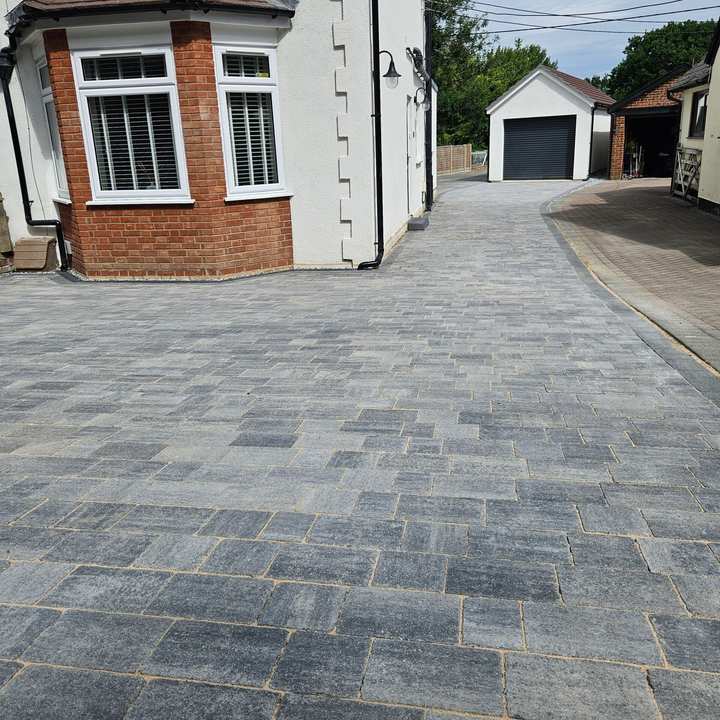
Block paving running to the garage
Projects
Block paving projects
Individual jobs in more detail: what we did, the materials used and, where we have them, before-and-after photos.
Thinking about block paving?Tell us a little about your space and what you have in mind, or give Dan or Adam a call.
Planning advice
Block paving driveways: what to know
- What block paving is
- A block-paved drive is made of individual blocks laid tightly together over a prepared base. We work with concrete and clay blocks, and with natural stone where it suits the house.
- Where it works well
- Block paving copes with cars turning and parking, and it suits sloping drives where loose gravel would move. Because it is made of separate blocks, a section can be lifted and relaid if a pipe or cable underneath ever needs attention, or if a block is stained or damaged.
- Laying patterns
- Herringbone is one of the patterns we lay. Its interlocking layout is widely used where vehicles drive and turn. Stretcher bond and basket weave are other traditional patterns. Which is right depends on the look you want and how the area will be used.
- Colours and borders
- A border in a contrasting colour frames the drive and gives it a crisp edge. Mixed-colour blocks give a softer look, while a single colour looks crisper. Seeing sample blocks against your own brickwork helps more than a brochure.
- What goes underneath
- What is under the blocks decides how well a drive lasts. The area is excavated, a suitable sub-base is laid, a bedding layer is screeded level and the blocks are laid on top. There is no single specification: the right method depends on the ground conditions, how the drive will be used, the drainage, the levels and what the project needs, so we decide it once we have seen the site.
- Standard or permeable, and planning permission
- Standard block paving sheds rainwater, so the drive needs somewhere for it to go. Depending on the property and the site, that may be a channel drain, a soakaway or a fall towards a lawn or border. Permeable block paving lets rain soak through wider joints into an open sub-base. In England, covering more than 5 square metres of a front garden with an impermeable surface that drains towards the road needs planning permission. Flats, listed buildings and homes where permitted development rights have been removed follow different rules.Sources: GOV.UK: permeable surfacing of front gardens (opens in a new tab), Planning Portal: paving your front garden (opens in a new tab)
- Looking after it
- Sweep the drive regularly and deal with weeds in the joints early. Top up the jointing sand when it washes out, and re-sand after pressure washing, which strips sand from the joints.
FAQs
Block paving: common questions
Is block paving permeable?
Standard block paving is not: water runs off it, so the drive is given drainage to suit the site, such as a channel drain, a soakaway or a fall towards a lawn or border. Permeable block paving is a different system, with wider joints and an open sub-base that let rain soak through.
Do I need planning permission for a block-paved driveway?
Not usually, if it is permeable or drains onto a lawn or border within your property. Impermeable paving over 5 square metres of a front garden that drains towards the road needs planning permission. Flats, listed buildings and homes without permitted development rights are different.
Which laying pattern should I choose for a driveway?
Herringbone is a popular choice for driveways because the blocks interlock, and it is one of the patterns we lay. Other patterns can suit the style of a house better. We will talk through the options with you, as the right one depends on the look you want and how the drive will be used.
Will weeds grow through block paving?
Weeds can seed into the joints from above. Sweeping regularly, dealing with them early and topping up the jointing sand when it washes out keeps them down.
Block paving or resin?
Block paving offers patterns and borders and can be lifted and relaid in sections. Resin gives a smooth, seamless finish. Our resin driveways guide explains the two resin systems.
More detail: resin driveways

Start your project
Tell us about your outdoor space
Call Dan or Adam for a chat about what you have in mind, or send us a few details and we’ll get back to you.