
Services
Garden paths, walkways & steps across Surrey, Hampshire & South West London
A good path or walkway takes you where you actually want to go: from the back door to the shed, along the side of the house to the bins, or across the lawn to a seat at the far end. Steps do the same job between levels. Both are walked on every day in all weathers, so they need a firm base, a gentle fall to shed water and edges that stay put.
We lay paved paths and side returns, stepping-stone routes set in gravel or chippings, and steps in paving, brick and timber sleepers, on their own or alongside a new patio, lawn or garden makeover. On steeper slopes we plan steps together with sleeper retaining walls.
What we do
Our paths & steps work
- Paved paths around the house, linking the front, side and back gardens
- Paved side returns along the narrow side of the house
- Stepping-stone paths set in gravel or chippings, through lawns and along fences
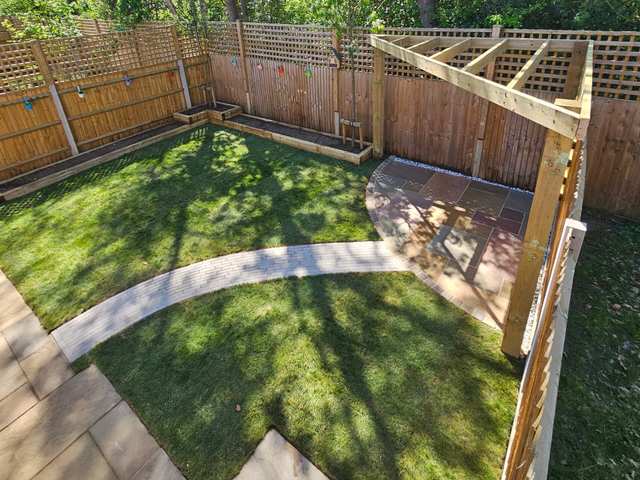
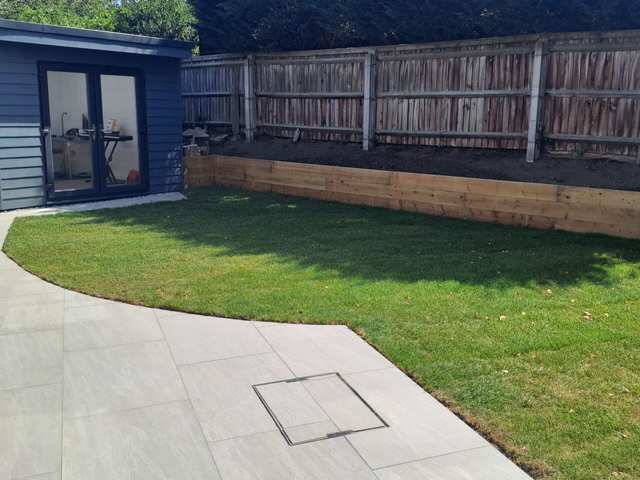
- Curved paths through newly laid lawns
- Steps in paving where a patio meets a higher lawn or level
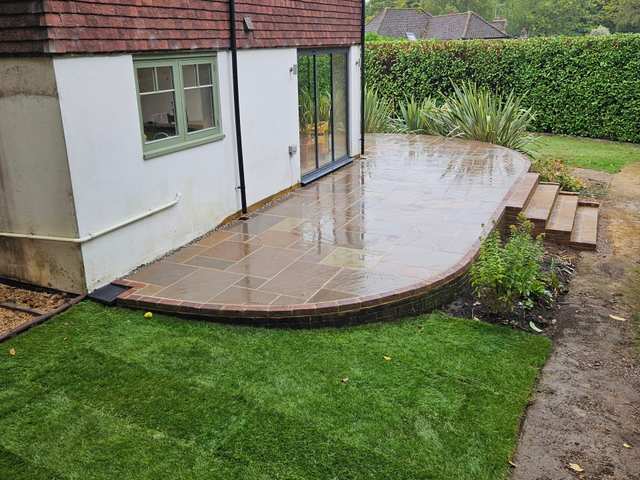
- Brick steps down from raised patios
- Timber-sleeper steps up steeper banks
- Gravel strips beside paths and recessed inspection covers set into the paving
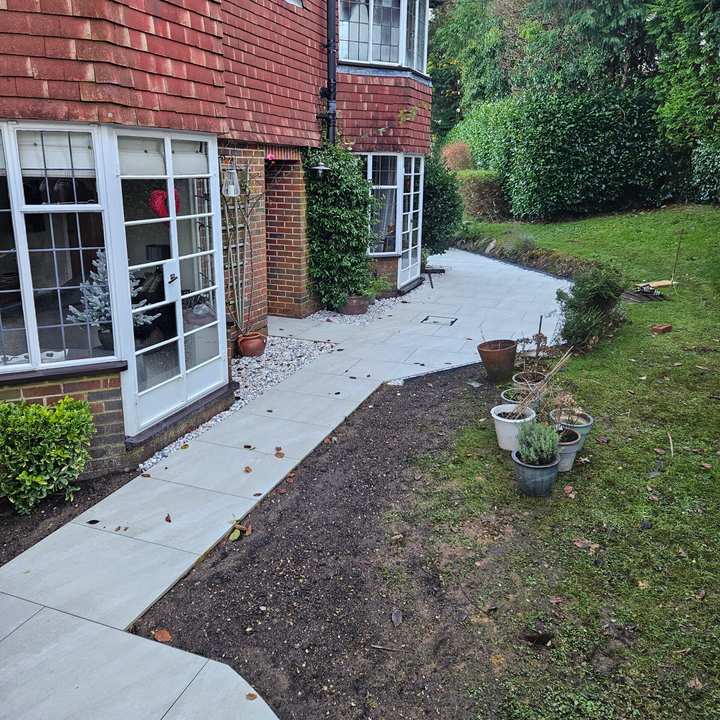
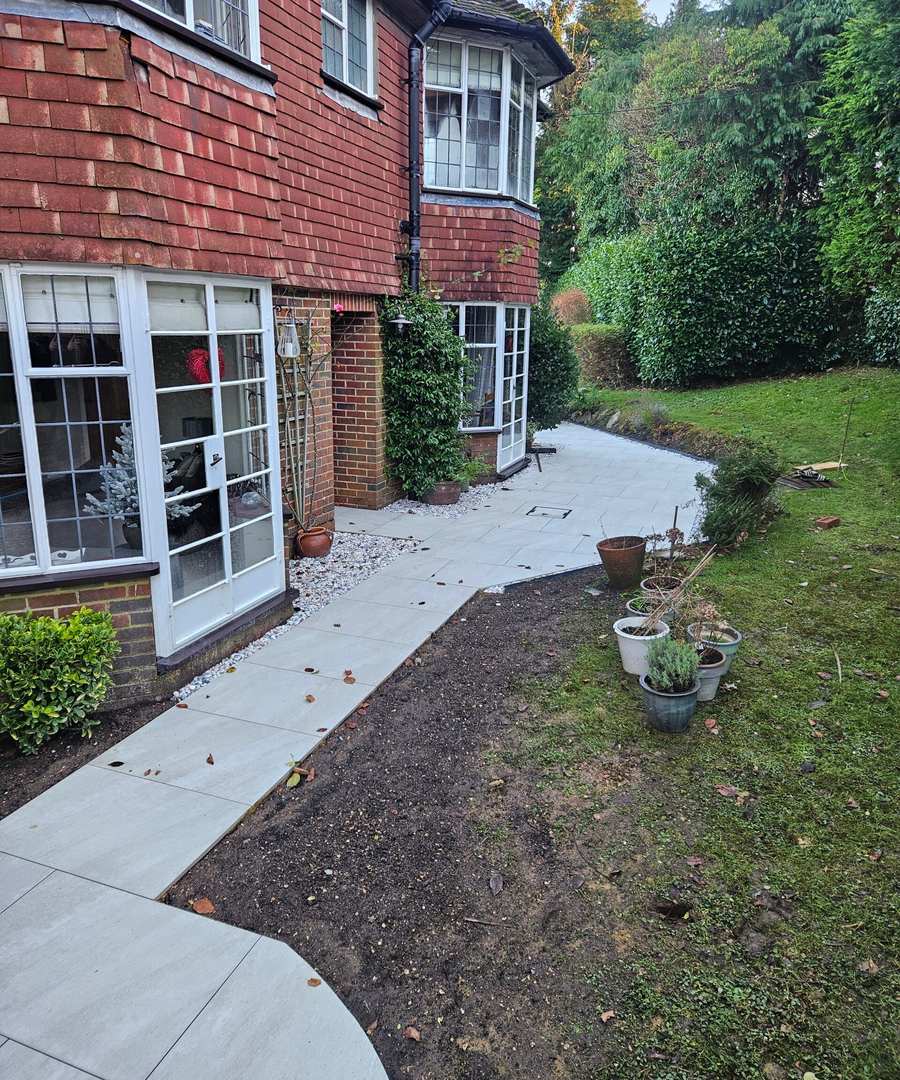
Paved path wrapping around the house 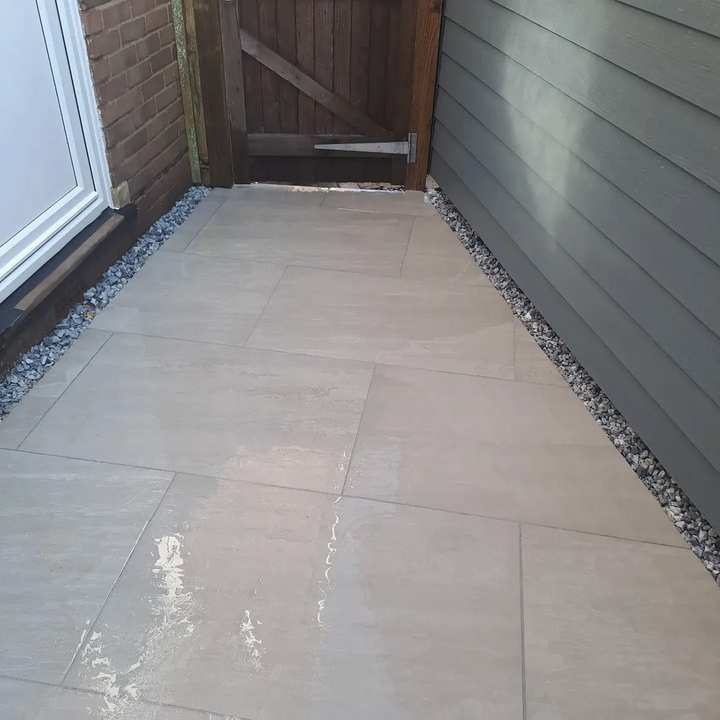
Paved side return, Guildford 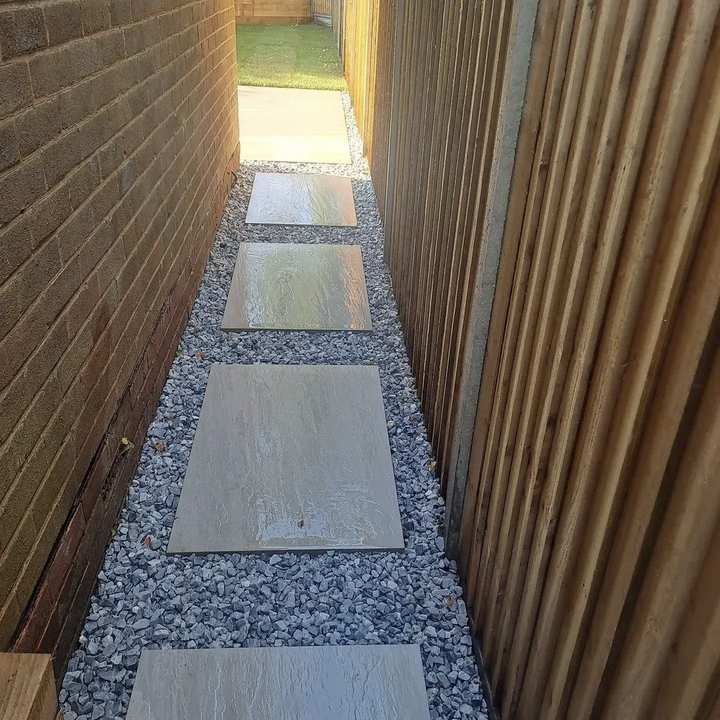
Stepping-stone side path, Guildford 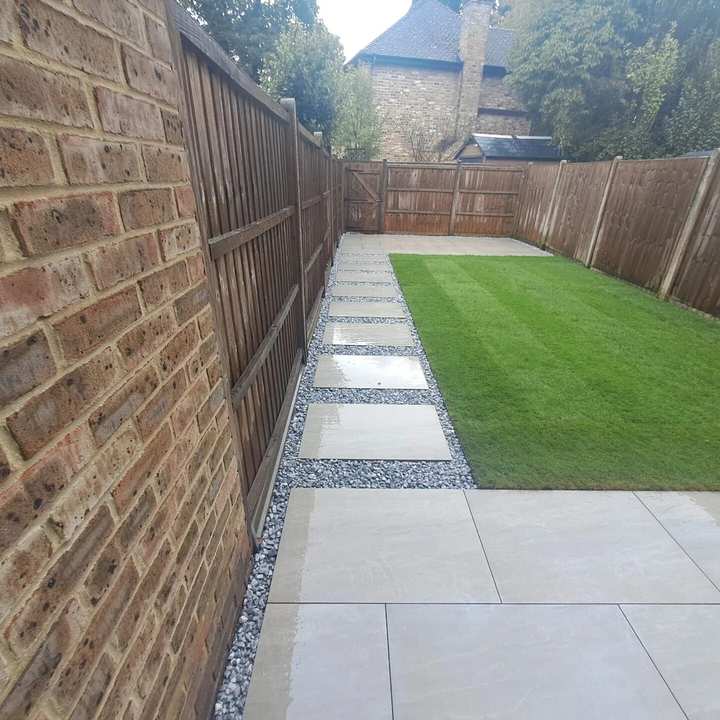
Stepping stones beside a new lawn 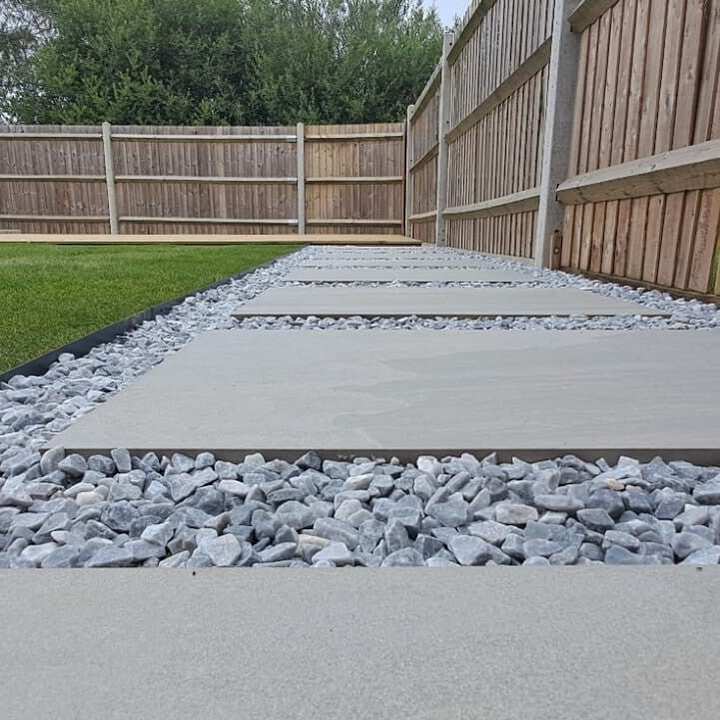
Stepping stones set in gravel 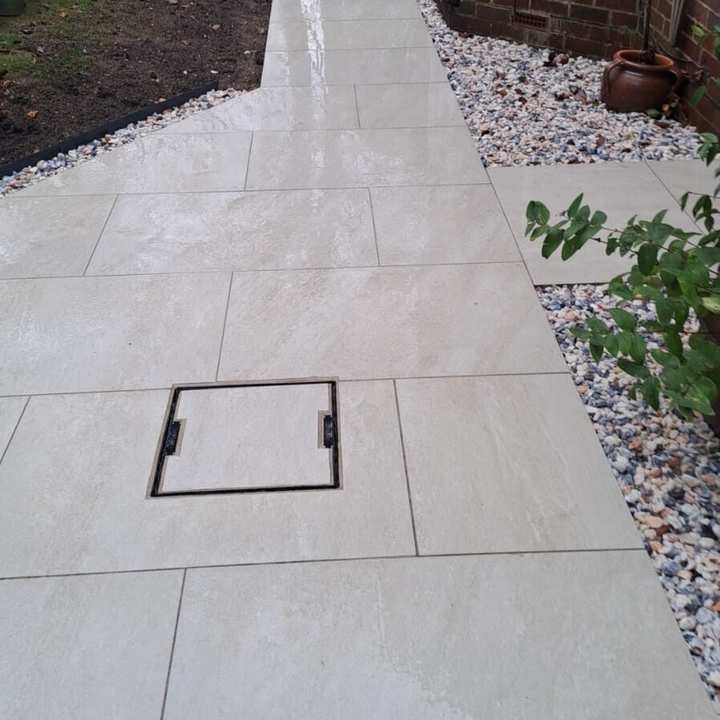
Path with a recessed inspection cover 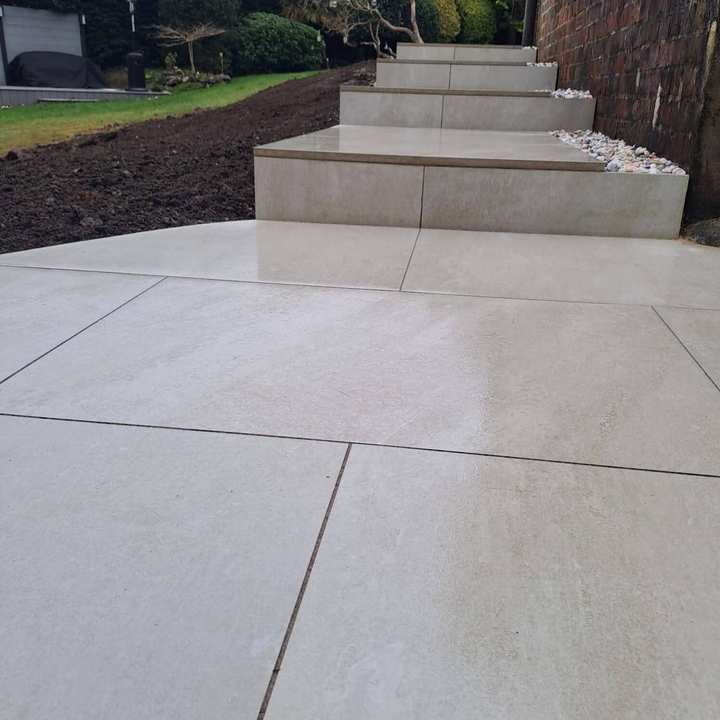
Paved steps up from a patio 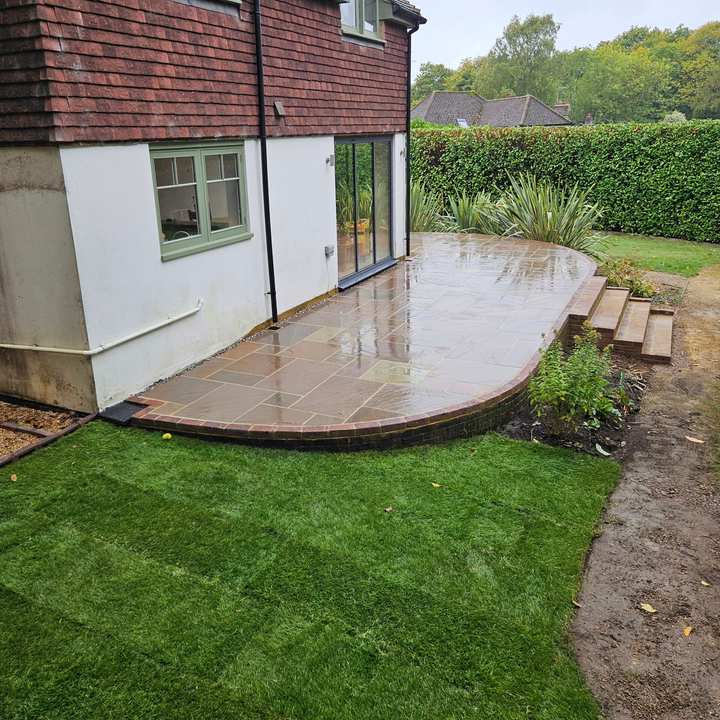
Brick steps from a curved Raj Green sandstone patio 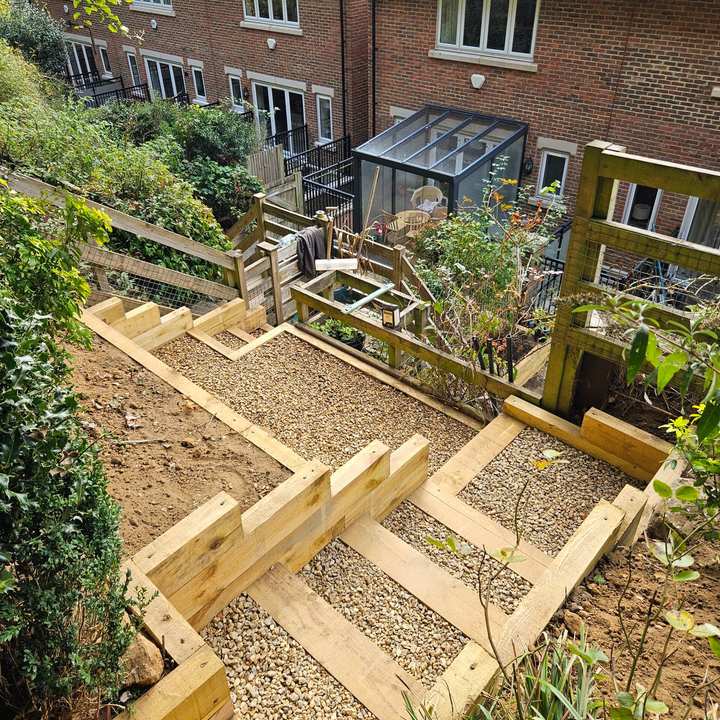
Sleeper steps on a steep bank
See more paths & steps projects
Paths and steps we build
The right choice depends on how the route is used, the slope and the look of the garden around it. We will talk it through with you on site.
Paved paths and side returns
A continuous paved surface for main routes, such as round the house, down the side return or out to the shed, often laid to match a new or existing patio.
Stepping stones in gravel
Slabs set in gravel or chippings. They look lighter than a solid path and let rain drain between the stones, which suits routes across a lawn or along a border.
Paved and brick steps
Steps built into the paving or in brick where a patio meets a higher or lower level, so the change of height feels part of the design.
Sleeper steps
Timber-sleeper risers with gravel treads, a practical way to climb a steep bank. Where the slope also needs holding back, the steps are planned with retaining walls.
Projects
Paths & steps projects
Individual jobs in more detail: what we did, the materials used and, where we have them, before-and-after photos.
Thinking about paths & steps?Tell us a little about your space and what you have in mind, or give Dan or Adam a call.
Planning advice
Planning a path or steps: what to consider
- Route and width
- The best paths follow the routes people already take: back door to shed, side gate to bins, patio to a seat at the end of the garden. Main routes need room for a wheelbarrow or wheelie bin, while a stepping-stone path through a border can be narrower.
- Falls and drainage
- A path needs a gentle fall so rain runs off onto a lawn, border or gravel rather than pooling. Next to the house it should fall away from the walls, finish at least 150 millimetres below the damp-proof course and keep air bricks clear.
- Comfortable steps
- Steps feel safe when every riser is the same height and every tread the same depth. Outdoor steps are usually lower and deeper than indoor stairs, and a single odd step is the one people trip on.
- Grip in shade and wet
- Shaded paths and steps stay damp and can grow algae, which makes them slippery. A textured finish, an occasional clean and cutting back overhanging plants all help.
- Edges and inspection covers
- Edging holds paving and gravel in place, so paths keep their line. Inspection chambers in the route must stay accessible, and recessed covers filled with matching paving let them blend in.
- Front paths and planning
- In England, new hard surfacing over 5 square metres in a front garden needs planning permission unless it is permeable or drains onto a lawn or border within the property. Most front paths fall well within this, and paths in back gardens do not usually need permission.Source: GOV.UK: permeable surfacing of front gardens (opens in a new tab)
FAQs
Paths & steps: common questions
What is the best surface for a garden path?
It depends on how the path is used. A continuous paved path is firm and easy to keep clean, which suits main routes and side returns. Stepping stones in gravel look softer and let rain drain away, which suits routes across a lawn or through planting. Matching the paving to a patio helps the garden feel joined up.
Stepping stones or a solid path?
Stepping stones suit lighter use and keep a lawn or border feeling open. A solid path is better for routes used every day, for wheelbarrows and bins, and wherever someone needs steady footing.
Can you pave the side return of my house?
Yes. We have laid paved side returns and stepping-stone side paths, including in Guildford. Next to the house the surface has to stay below the damp-proof course and clear of air bricks, with water draining away from the walls.
Can you build steps in a sloping garden?
Yes. We have built steps in paving and brick where a patio meets a higher or lower level, and timber-sleeper steps up steep banks. Where the ground also needs holding back, steps are planned together with retaining walls.
Do I need planning permission for a garden path or steps?
Not usually. Paths and steps in a back garden rarely need permission. In a front garden, new hard surfacing over 5 square metres needs permission unless it is permeable or drains onto a lawn or border within the property. Raised terraces or platforms more than 30 centimetres above the ground, and work at listed buildings or in conservation areas, can need consent.

Start your project
Tell us about your outdoor space
Call Dan or Adam for a chat about what you have in mind, or send us a few details and we’ll get back to you.