
Services
Porcelain patios across Surrey, Hampshire & South West London
Porcelain has become a popular choice for new patios because it looks sharp, stays consistent in colour and needs very little upkeep. It suits contemporary homes and extensions with large glazed doors, and stone-effect finishes can sit comfortably with more traditional houses too.
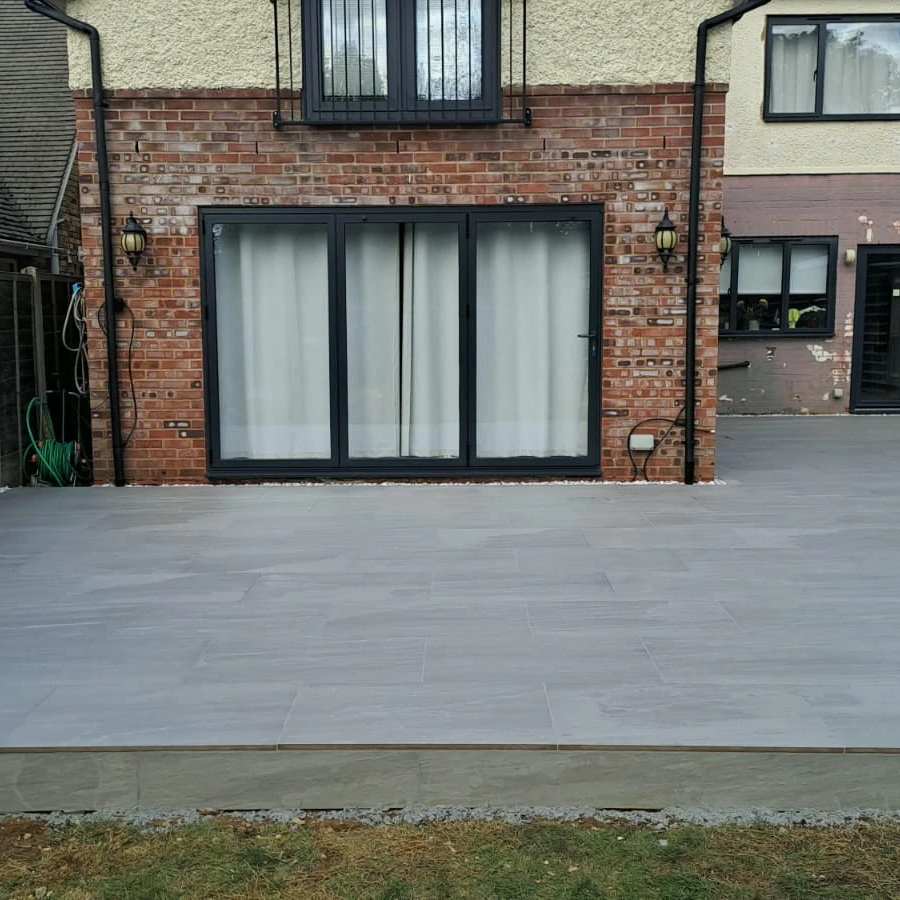
We lay porcelain patios, terraces and paths. The photographs on this page are from our own projects, including the Kandla grey porcelain patio in Chobham that replaced old timber decking. For the wider picture, see patios and paving; if you would like more variation and character, see our guide to natural stone patios.
What we do
Our porcelain patios work
- Porcelain patios outside back doors and bi-fold doors
- Porcelain terraces and paths around the house
- Replacing old decking or worn paving with porcelain
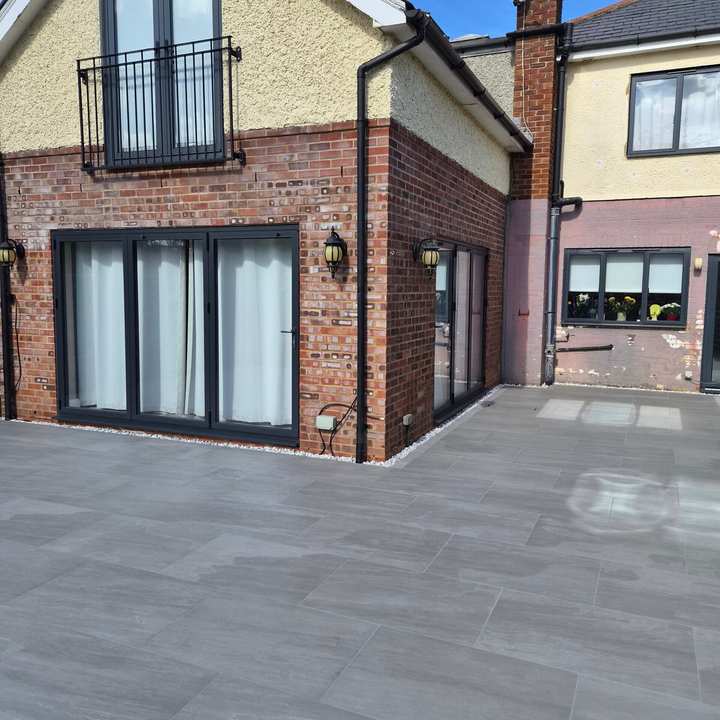
Kandla grey porcelain patio, Chobham 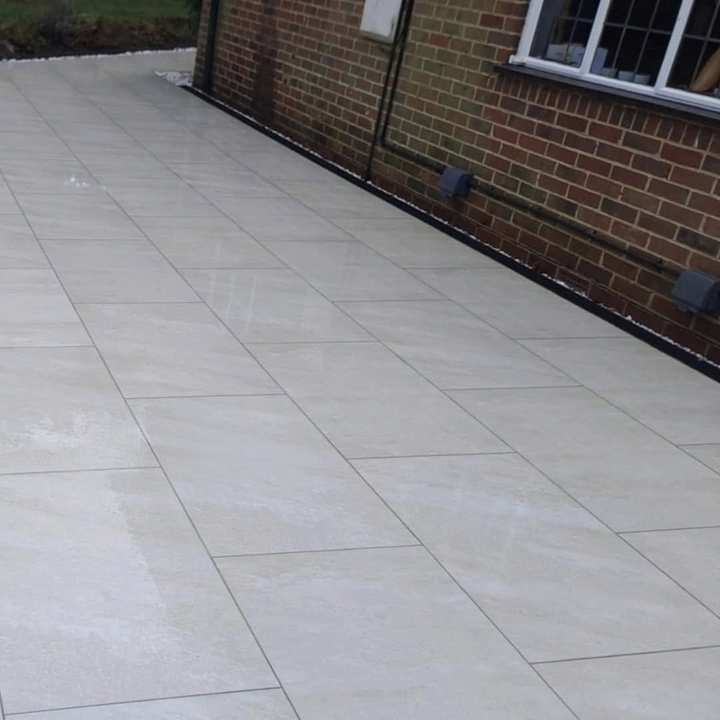
Pale porcelain terrace along the house 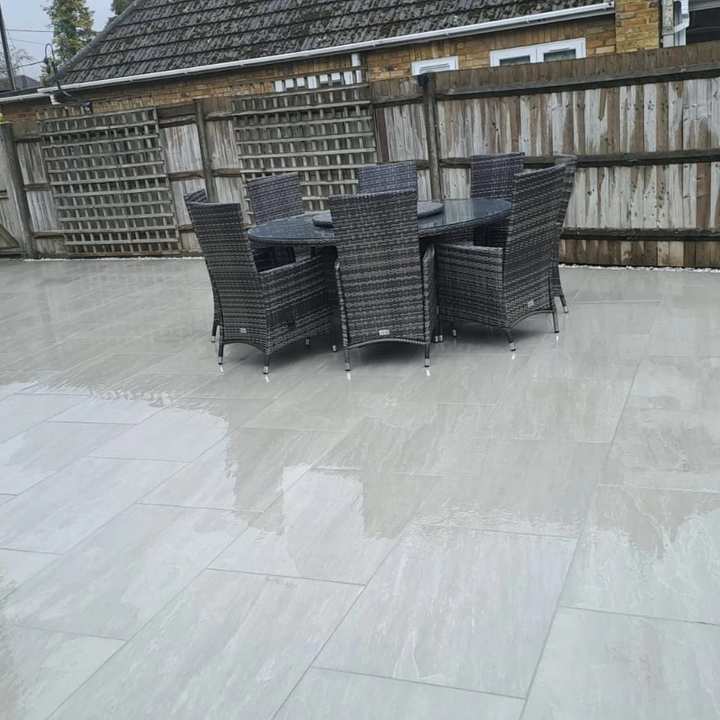
The Chobham patio with the surface wet 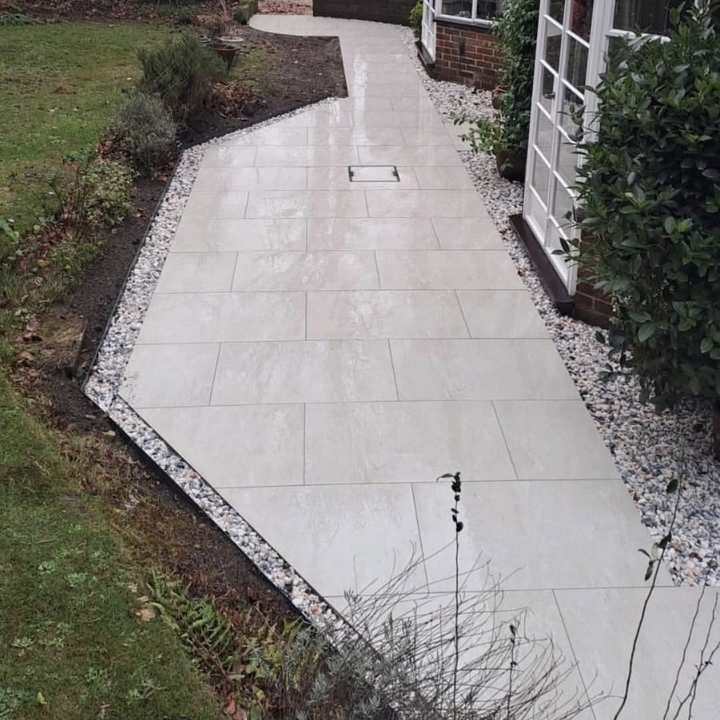
Porcelain path with a recessed cover 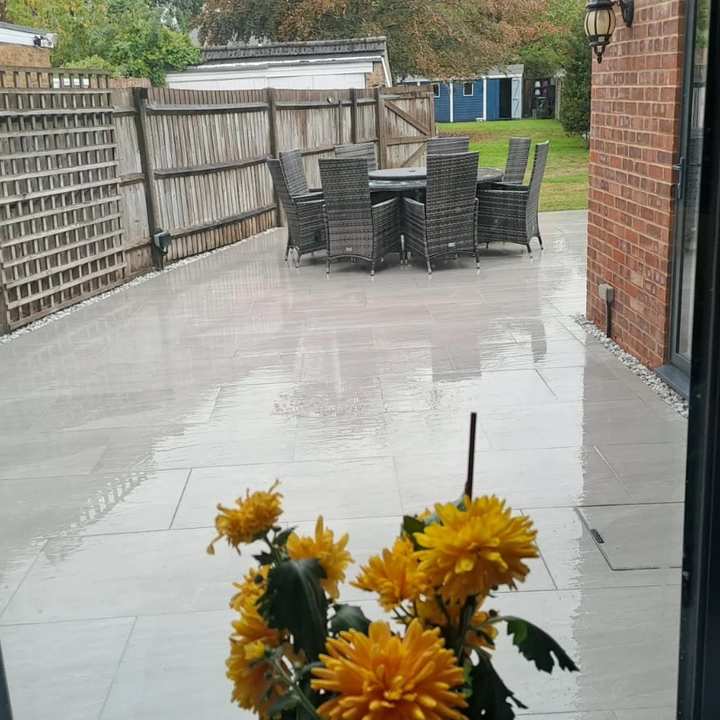
Seen from indoors, through the open doors 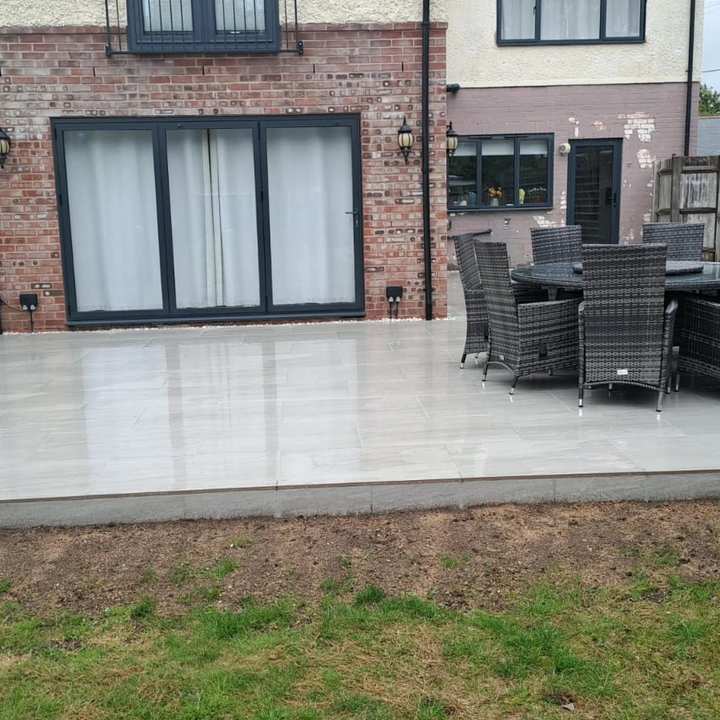
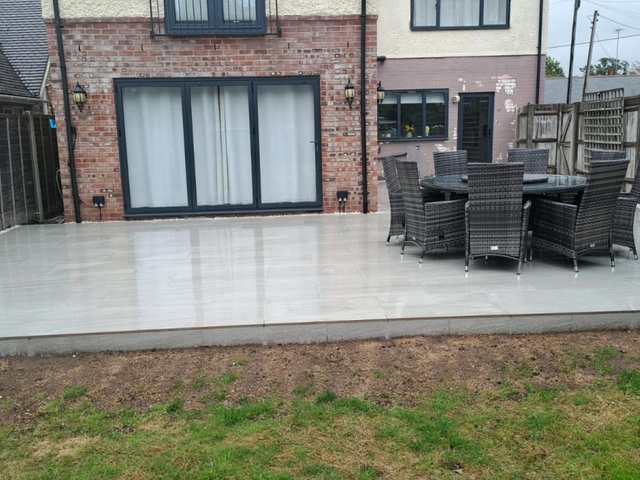
Porcelain patio from the lawn, Chobham
Projects
Porcelain patios projects
Individual jobs in more detail: what we did, the materials used and, where we have them, before-and-after photos.
Thinking about porcelain patios?Tell us a little about your space and what you have in mind, or give Dan or Adam a call.
Planning advice
Porcelain paving: what to know
- What porcelain paving is
- Porcelain paving is a manufactured slab, fired at very high temperatures until it is dense and absorbs almost no water. Outdoor porcelain is thicker than indoor tiles and has a textured surface made for use outside.
- How it looks
- Colour and pattern are consistent from slab to slab and the edges are straight, so the lines of a patio stay crisp. Finishes range from plain modern greys to slabs made to resemble natural stone, such as the Kandla grey porcelain on our Chobham project.
- Where it suits
- Porcelain works well outside bi-fold and sliding doors, beside modern extensions and for terraces and paths around the house. Because it absorbs so little water, it is slower to stain and to turn green than more porous paving.
- Laying porcelain
- Porcelain is dense and hard, so it has to be laid and jointed in a way that suits the material, and cut with care around drains, steps and edges. The right method depends on the ground conditions, the drainage, the levels and how the patio will be used, so we decide it once we have seen the site.
- Colour and temperature
- Pale porcelain can be bright in strong sun, and very dark slabs get warm underfoot. Samples seen outside, in your own light, are the best guide.
- Looking after it
- Porcelain does not need sealing. Sweeping and an occasional wash with water and a mild detergent keep it clean. Like any paving, it can become slippery if algae builds up in damp shade.
FAQs
Porcelain patios: common questions
Is porcelain paving slippery?
Outdoor porcelain has a textured surface made for exterior use. Like any paving, it can become slippery if algae builds up in damp shade, so occasional cleaning helps.
Does porcelain need sealing?
No. Porcelain absorbs almost no water, so unlike most natural stone it does not need sealing.
How do I clean a porcelain patio?
Sweep it regularly and wash it with water and a mild detergent. A soft brush removes most marks. Check the manufacturer's advice before using anything stronger.
Can porcelain replace old decking?
Yes. On our Chobham project the old timber decking was taken up, the ground was dug out and prepared, and a Kandla grey porcelain patio was laid in its place.
More detail: the Chobham porcelain patio project
Porcelain or natural stone?
Porcelain gives a crisp, uniform finish that needs very little upkeep. Natural stone varies from slab to slab and weathers with age, which many people prefer with older houses and established planting. We lay both.
More detail: natural stone patios

Start your project
Tell us about your outdoor space
Call Dan or Adam for a chat about what you have in mind, or send us a few details and we’ll get back to you.